
A practical guide to their purpose, operation, applications, and maintenance
━━━━━━━━━━━━━━━━━━━━━━━━━━━━━━━━━━━━━━━━━━
| Fire-rated rolling shutters are designed to close building openings during a fire emergency, helping support fire compartmentation while allowing normal access when no emergency is present. |
What Is a Fire-Rated Rolling Shutter?
A fire-rated rolling shutter is a protective closure installed across an opening in a wall, ceiling, or partition. In everyday conditions, it can remain open to allow people, goods, or equipment to pass through. When a fire emergency occurs, the shutter closes to help limit the movement of flames, heat, and smoke between areas. Unlike an ordinary security shutter, a fire-rated system is designed as part of a tested fire-separation assembly and must be selected to match the building’s design and local requirements.
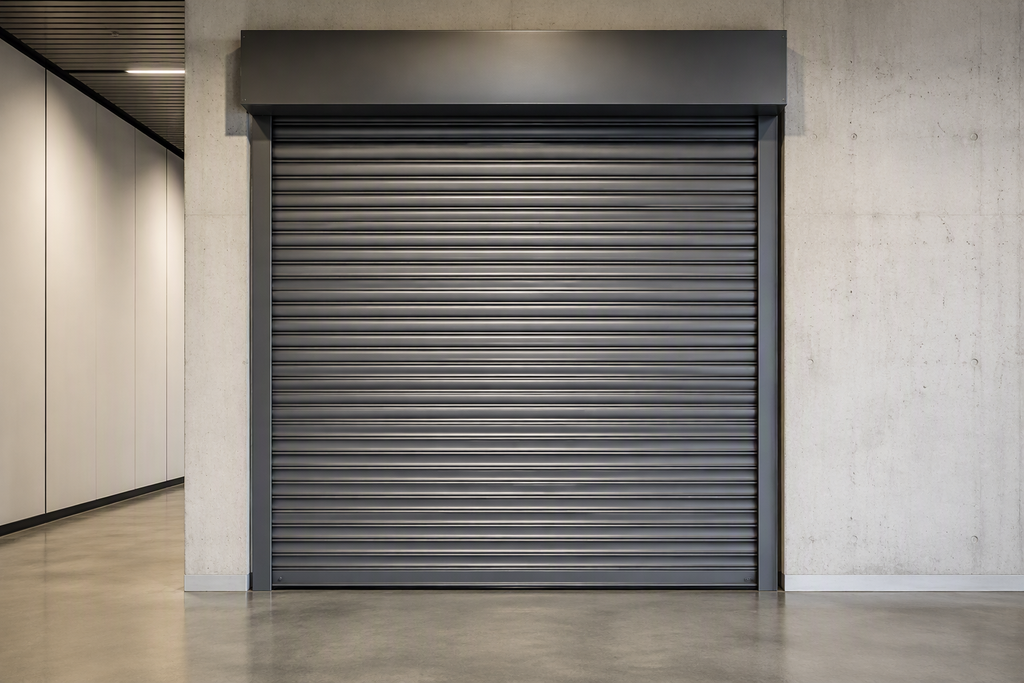
A fire-rated rolling shutter installed in a commercial building opening.
How Does It Work?
The system normally consists of a metal curtain, a top housing or barrel, side guides, and a control or release mechanism. Depending on the installation, the shutter may close automatically when connected to the building’s fire detection or alarm system, or it may be released by a dedicated thermal or mechanical arrangement. Once closed, the continuous curtain covers the opening and creates a physical barrier. Its effectiveness depends on the complete assembly: the curtain, guides, supporting construction, control system, and installation details must work together.
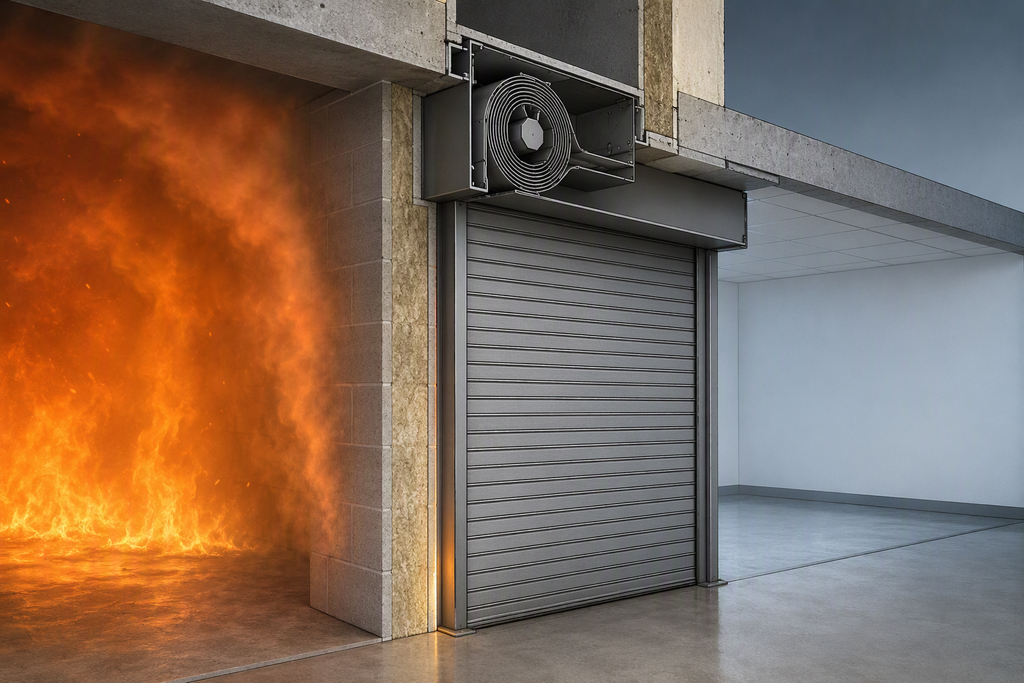
A cutaway view showing how a closed shutter helps separate a fire-affected area from a protected space.
Where Are They Used?
Fire-rated rolling shutters are commonly used where a large opening must remain operational during normal use but still require compartmentation during an emergency. Typical locations include warehouses, factories, loading areas, shopping facilities, car parks, kitchens, service corridors, and openings between production or storage zones. They are especially useful in buildings where conventional hinged fire doors would restrict traffic, reduce usable space, or be difficult to keep closed.
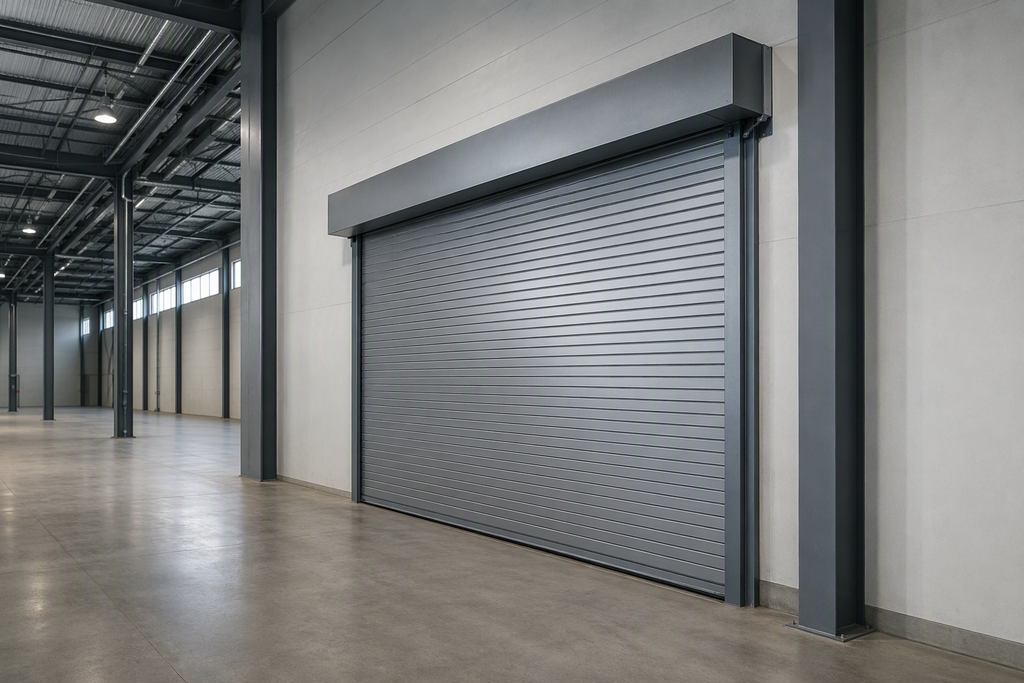
A rolling shutter integrated into a modern warehouse or logistics facility.
Why Installation and Maintenance Matter
A shutter can only provide reliable protection when it is correctly specified, installed, and maintained. The opening, surrounding wall, operating controls, and detection interfaces should be checked as one system. Routine inspections should confirm that the curtain can descend without obstruction, the guides and housing are secure, warning signs are visible, and the release mechanism responds as intended. Dust, impact damage, stored goods, or later building modifications can affect performance, so inspection records and planned servicing are important.
A Practical Part of Fire Safety Planning
Fire-rated rolling shutters do not replace a complete fire-safety strategy. They work alongside fire detection, alarms, emergency lighting, evacuation planning, sprinklers, and other protective measures. By closing a vulnerable opening and supporting compartmentation, they can help give occupants more time to respond and help reduce fire spread. For any project, consult a qualified fire-safety professional and follow the applicable building codes, tested-system requirements, and manufacturer instructions.
Editorial note: This article provides general educational information. Project-specific selection should be based on applicable codes, tested assemblies, and qualified professional advice.
 English
 French
 Arabic